All Categories
Featured
Table of Contents
Author: Jessie JacksonJessie Jackson is a Senior Consultant, Practice Lead in OSF Digitals Method group. She has 20+ years of experience as an omnichannel digital commerce magnate in the D2C market. Jessie helps OSF customers with tactical planning, service management and developing remarkable consumer experiences.
It includes automation, data, AI, and cloud to reshape organization operations. From logistics automation to virtual health care, change can drive both development and efficiency.
Adapting to Rapid Tech Innovation CyclesIn this post, we'll check out how companies are embracing digital change, where initiatives are focused, and why it stays a top concern for organizations seeking to remain competitive in a significantly busy, tech-driven world. Digital transformation involves utilizing the current digital technologies to essentially improve how a service runs. While digital improvement became a mainstream organization vital in the 2010s, the roots go further back, starting with digitization in the 1980s and '90s.

Key Tips for Sustaining Smart Hubs
The term "digital improvement" itself started getting traction around 2011, when it was utilized to explain the broader organizational effect of innovation shifts. True digital transformation goes beyond IT upgrades or updating existing workflows. It uses innovative technologies to reimagine those processes entirely, unlocking new types of worth for customers and driving long-term growth.
Let's clarify with an example from consumer service: Suppose a company moves from phone-based assistance to email or introduces a chatbot for after-hours queries. This new system delivers 24/7 tailored service throughout channels like chat, e-mail, and mobile apps.
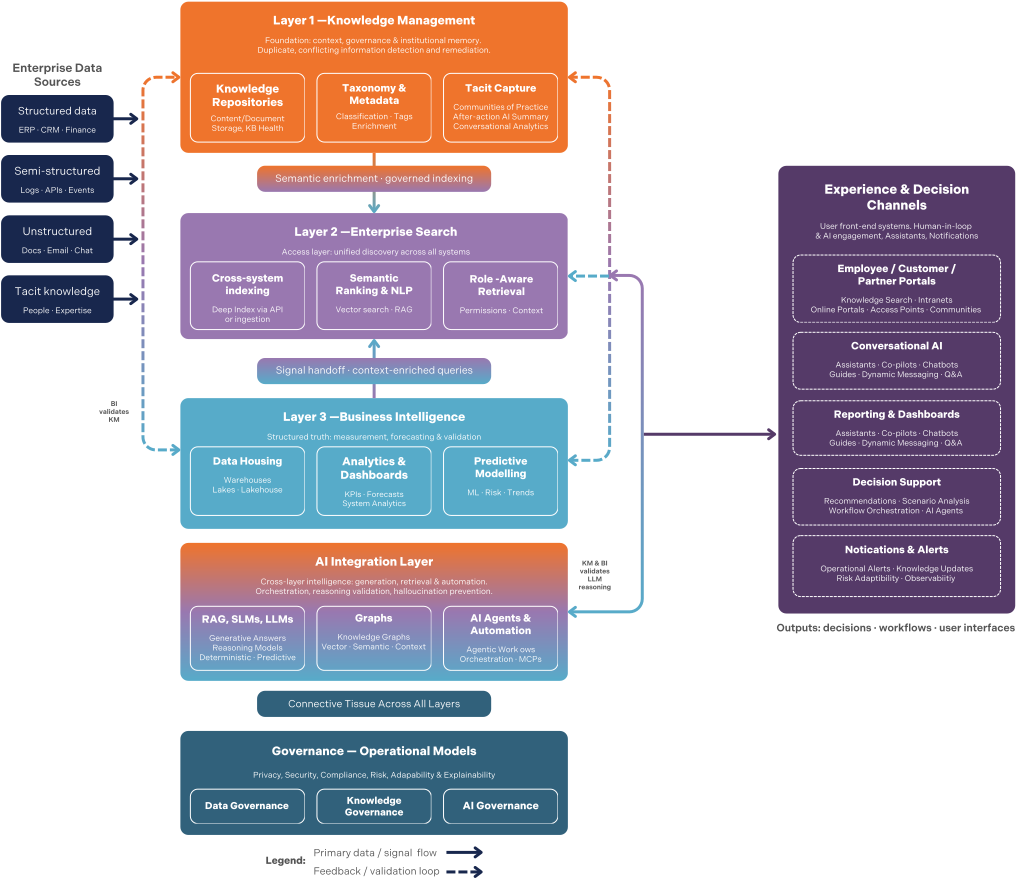
Digital transformation basically changes the nature of support, making it more innovative, personal, and always available. That's digital transformation: a fundamental shift in how value is provided through technology.
Many digital improvement efforts focus on these crucial locations: Automated workflows replace manual processes, lowering errors, increasing performance, and making it possible for workers to focus on higher-value tasks. Constantly reconsidering how value is delivered by simplifying digital journeys, speeding up support, and customizing experiences across all channels. Tradition systems often slow progress.
Real-time data and analytics supply insights into efficiency and customer behavior, making it possible for smarter, faster choices. Unifying platforms and procedures break down departmental silos, improves partnership, and offers management a thorough view of operations.
Why High-Performance Innovation Units Drive Enterprise Success
According to Harvard Organization Review, effective digital transformation tends to involve 5 interconnected components:: Getting the right management, culture, and talent in place.: Gathering tidy, high-quality data throughout systems.: Turning that information into usable insights through analytics.: Operationalizing insights throughout workflows, systems, and decisions.: Determining outcomes and refining strategies based upon performance.
, also highlight the value of lining up method, structure, and people to drive significant improvement. The 5 main components of digital improvement include individuals, data, insights, action and outcomes.
Here are some specific real-world benefits can you anticipate: Leveraging the most recent technologies permits you to rethink your entire organization design. Early adoption or pioneering new tools can help you approach obstacles in distinct ways, grow market share, and remain ahead while competitors are still catching up. Digital improvement allows you to boost the client journey from start to finish.
Automating manual tasks streamlines workflows, lowers mistakes, and releases staff members to focus on higher-value work. These efficiencies cause cost savings through better resource allotment, fewer traffic jams, and, in some cases, minimized staffing needs. Real-time data and incorporated systems provide groups with improved presence, enabling your company to react and adapt quickly to market changes, client demands, or internal obstacles.
Accelerating Tech Innovation Workflows for Agility
Adopting advanced technology is pricey, specifically when establishing brand-new solutions. A total overhaul of existing processes can produce authentic unpredictability for staff members.

Latest Posts
A Modern Guide for Enterprise Transformation Success
Optimizing ROI via Smart Innovation Hubs
Why Modern Hubs Are Critical in 2026